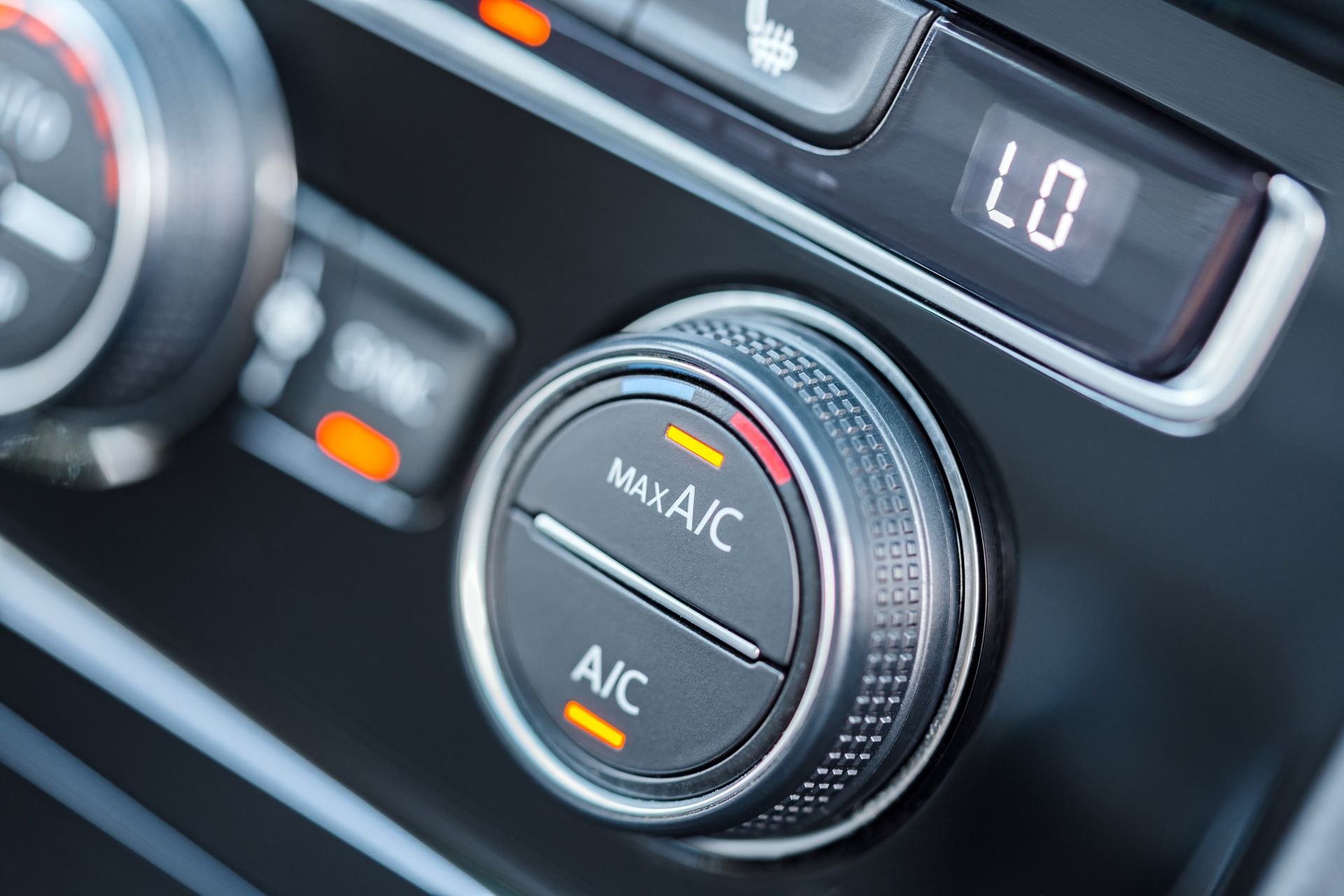
When a vehicle’s air conditioning begins blowing warm air, asking for a recharge may seem like the fastest solution. Refrigerant is essential for cooling, but low refrigerant is often a symptom of another problem rather than the complete explanation.
A recharge restores the specified amount of refrigerant. An A/C repair addresses the reason cooling performance declined, whether that involves a leak, compressor problem, electrical fault, damaged fan, or airflow restriction. Testing the system first can prevent repeated recharges that only provide temporary relief.
A Recent Recharge Did Not Last
Automotive A/C refrigerant circulates through a sealed system. It is not consumed during normal operation, so a system that becomes low again usually leaks. The refrigerant may be escaping from a hose, seal, service port, condenser, evaporator, or compressor.
A small leak can allow the A/C to work for weeks or months after a recharge. A larger leak may cause cooling to disappear within days. Recharging the system again without locating the source can waste refrigerant and leave the driver with the same warm-air complaint shortly afterward.
The Compressor Is Not Operating Correctly
The compressor circulates refrigerant and creates the pressure difference needed to remove heat from the cabin. Depending on the vehicle, it may use a clutch, an electronic control valve, or a variable-displacement design. Internal wear or control trouble can prevent it from producing the correct pressure.
A damaged compressor may create rattling, grinding, or squealing when the A/C is switched on. In other cases, it may operate quietly but fail to pump effectively. Pressure testing, scan data, and electrical checks help determine whether the compressor itself has failed or another component is preventing it from working.
Cooling Changes With Vehicle Speed
A/C that blows warm while stopped but becomes colder once the vehicle is moving often points toward an airflow concern at the condenser. While driving, outside air passes through the grille. At idle, electric cooling fans must pull air across the condenser to release heat.
A failed fan motor, relay, fuse, wiring connection, temperature sensor, or control module can reduce that airflow. Dirt, leaves, or physical damage may also block the condenser. Adding refrigerant will not correct a fan or airflow problem, and high system pressure could eventually place additional strain on the compressor.
The Airflow From The Vents Is Weak
Warm cabin temperatures do not always come from the refrigerant side of the system. The evaporator may be getting cold, but a clogged cabin filter, weak blower motor, failed resistor, damaged control module, or blocked air passage can prevent enough air from reaching the vents.
A stuck blend door can also direct heated air into the cabin or keep cold air from reaching one side of the vehicle. If airflow remains weak at every fan setting, or if different vents produce noticeably different temperatures, the system needs an inspection rather than an automatic recharge.
There Are Signs Of A Refrigerant Leak
Refrigerant leaks are not always visible, but oil often escapes with the refrigerant and leaves residue near the failed area. A technician may also use ultraviolet dye, an electronic detector, or pressure testing to locate a slow leak.
Possible leak indicators include:
- Cooling that fades soon after service
- Oily residue around A/C fittings
- Hissing after the engine is turned off
- A compressor that cycles frequently
- Visible damage to the condenser
- Refrigerant dye near a hose or seal
- Warm air that returns every summer
Leak testing should be completed before replacing parts. Several components may show dirt or oily buildup, so confirming the exact source helps avoid unnecessary repairs.
Electrical Problems Can Stop Cooling
Modern A/C systems depend on pressure sensors, temperature sensors, relays, wiring, switches, modules, and computer commands. A fault in one of these areas can prevent compressor operation even when the refrigerant charge is correct.
Diagnosis may involve checking fuses, measuring voltage, reviewing stored fault codes, and monitoring live data. The technician may command the compressor or cooling fans through a scan tool to see how the system responds. A recharge cannot correct a broken wire, inaccurate sensor, or failed relay.
The System Is Contaminated Or Damaged
If a compressor fails internally, metal particles can circulate through the refrigerant system. Those particles may collect in the condenser, expansion valve, orifice tube, hoses, and other passages. Simply replacing the compressor and adding refrigerant may allow the debris to damage the new part.
A major repair may require replacing contaminated components, flushing approved sections, installing a new receiver-drier or accumulator, and adding the correct amount of oil. The system must then be evacuated and charged by weight. Careful repair protects the replacement parts and restores proper refrigerant flow.
Why Proper Testing Comes Before A Recharge
A professional diagnosis compares high-side and low-side pressure, vent temperature, ambient temperature, refrigerant quantity, compressor response, and fan operation. Technicians may also check the cabin filter, air doors, electrical controls, and visible system components.
Regular maintenance can help identify damaged belts, weak fans, dirty filters, and early leaks, but A/C problems still require symptom-based testing. The final recommendation may include a recharge, leak repair, electrical work, airflow repair, or replacement of a failed component.
Get A/C Repair In Calgary, AB, With Kirkham Automotive
If your vehicle blows warm air, loses cooling after a recharge, or cools differently at idle and highway speed,
Kirkham Automotive in Calgary, AB, can test the refrigerant system, compressor, cooling fans, airflow, and electrical controls.
Contact us to schedule an appointment and determine which repair will restore dependable cabin cooling.